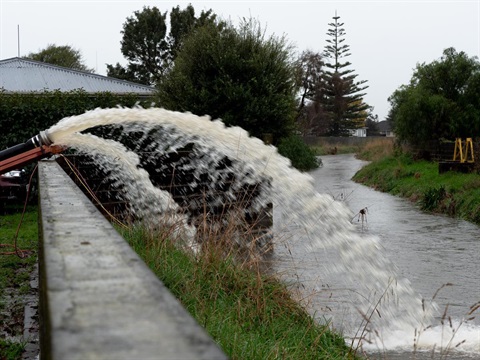
We’re developing a stormwater strategy to better manage stormwater, protect our waterways, prepare for climate change and support how our city grows. Now we want your feedback on whether we’ve got it right.
Managing stormwater well is more important than ever
Palmerston North sits beneath the Tararua Ranges and alongside the Manawatū River, a beautiful setting that also brings flood risk. Like many places across New Zealand, severe weather events are becoming more intense. With much of the city low-lying, good stormwater management is important to help protect people, property and infrastructure.
Stormwater is the rainwater that falls on roofs, roads, footpaths and parks and moves through the city via drains, pipes and waterways.
During heavy rain, these systems can fill quickly, and water may flow across roads and green spaces through overland flow paths, which are a key part of the stormwater network. Once these and the waterways are full, flooding can start to cause problems around the city.
Though all of our waterways are connected, river flooding and stormwater are managed separately: the Manawatū River and stopbanks are managed by Horizons Regional Council, while Palmerston North City Council manages the city’s stormwater network.
Building smarter stormwater for a stronger city
Better stormwater planning helps protect homes, businesses and the environment and ensures new development doesn’t increase flood risk.
As the city grows, parts of our stormwater network will need expanding or upgrading. That means we need to prioritise carefully and invest where it will build long-term resilience, while also strengthening our technical capability to manage the system into the future.
While we’ve made good progress in recent years, much of our work is still reactive.
The strategy aims for a more coordinated, long-term approach to get ahead of issues. It supports a continued shift toward water-sensitive solutions like rain gardens, swales, blue-green spaces and permeable surfaces that slow, soak up and filter water. These approaches can reduce flooding, improve water quality, and create better urban spaces while supporting smarter investment.
Read the full consultation document(PDF, 3MB)
Stormwater management methods currently used around Palmerston North
Pipe networks and culvert upgrades
Underground pipes and culverts are part of the network that carries stormwater away from homes and streets. Councils regularly replace and upsize these systems to keep up with urban growth and the heavier rainfalls brought by climate change, which makes them expensive to maintain if we rely on this as our primary method for managing stormwater.
Overland flow paths (secondary flow paths)
When pipes are full, these flow paths - through some of Palmy’s roadsides, parks, and green corridors - let stormwater travel safely above ground. They are used in some of the city’s new subdivisions and we are also upgrading some of the existing older flow paths by opening up adjacent waterways and planting them with natives, like with the recent Te Matai and Awatea stream projects.
Permeable surfaces
Our urban design rules ensure that a proportion of a property has surfaces such as grass, berm, gravel, or garden than will allow rainwater to soak into the ground. We set a maximum proportion for hard surfaces such as concrete or asphalt that cannot absorb rainwater, which runs off at high volumes and velocity, carrying contaminants and heat that are not good for plants and animals that live in freshwater.
Stormwater treatment devices (Filterra, gross pollutant traps, sumps)
These devices catch litter, sediment, and other pollutants before the water enters streams and rivers. They’re a standard requirement in many new developments.
Land use planning and low-impact urban design
Modern planning encourages developers to design streets and sites that work with water - using swales, reducing paved areas, and shaping layouts that manage stormwater naturally.
Detention / attenuation basins
These basins hold stormwater during heavy rain and release it slowly, helping prevent flooding in surrounding areas. They’re widely used in subdivisions and industrial zones—like the large pond off James Line in Whakarongo, which manages runoff for about 500 homes and cleans the water before it reaches the nearby lagoon.
Constructed wetlands & raingardens
These systems filter stormwater as it moves through plants and soils, removing some of the sediment, nutrients, and metals while also slowing the flow. They’re increasingly used in new subdivisions across the city, including in Summerhill and near the lagoon. More could be created in future by building wetlands along some of our existing waterways.
Green or nature-based infrastructure (permeable pavement, green roofs, etc.)
Called ‘green’ because these features mimic natural systems, these methods let rain soak into the ground or evaporate instead of running off hard surfaces. They’re still less common in smaller cities but are becoming more popular as urban design shifts toward nature-based solutions instead of relying on pipe networks and culverts.
Rainwater harvesting / on-site detention
Tanks, soakage pits, and similar systems capture roof water on-site, storing or slowly releasing it to reduce pressure on public networks. They’re already required in some parts of the city and are increasingly popular for infill housing across Palmerston North. The exact method would be matched to characteristics of the site such as soils, slope and natural underground water systems.
Blue-green spaces
Areas that can be flooded in heavy rainfall events, like low lying areas or stream margins or former oxbows, can have other uses when they are not flooded. These uses can include active transport, recreation and play spaces, or for community gardens or tree crops (māra kai).
Examples from around New Zealand
Other cities use engineered green corridors to guide stormwater to major waterways, strategic pump stations in flood-prone areas, and ‘sponge city’ designs that focus on holding and absorbing water on-site. With the right locations and resources, these ideas could also be explored in Palmerston North.
Key priorities for the next five years
The stormwater strategy takes a wider view of how water moves through the city, including land use and where stormwater comes from. It doesn’t lock in specific projects, but helps guide future decisions and investment. Over the next five years, the strategy will guide a more adaptive, sustainable and affordable approach to managing stormwater as the city grows.
Developed with Rangitāne o Manawatū, the strategy also reflects their aspirations for a city that uplifts the mauri and health of waterbodies and strengthens connections to them, in line with a Whānau Ora approach linking the wellbeing of people and the environment.
The draft has also been developed with input from Horizons Regional Council, neighbouring councils, developers, businesses and community groups. Now we want to hear from the wider community.
From our engagement, four key priority areas have emerged, they are to:
- Develop the right skills and partnerships
Strengthen technical expertise across Council and partners, including water sensitive design skills, and draw on a mix of technical knowledge, social insight, and mātauranga (knowledge, wisdom).
- Use the tools we already have better
Improve compliance through better resourcing of enforcement, and increase education and awareness so people understand stormwater and how to manage it well.
- Improve our stormwater information
Update our stormwater modelling, assess flood risk in growth areas, and improve how we collect, store and share monitoring data to support better decisions.
- Investigate long-term options
Work collaboratively on catchment-scale water sensitive design and develop priority responses for high-risk locations. At the same time, explore long-term options to improve the resilience of waterways and create multi-use stormwater spaces that also benefit the community.