Ahimate Reserve
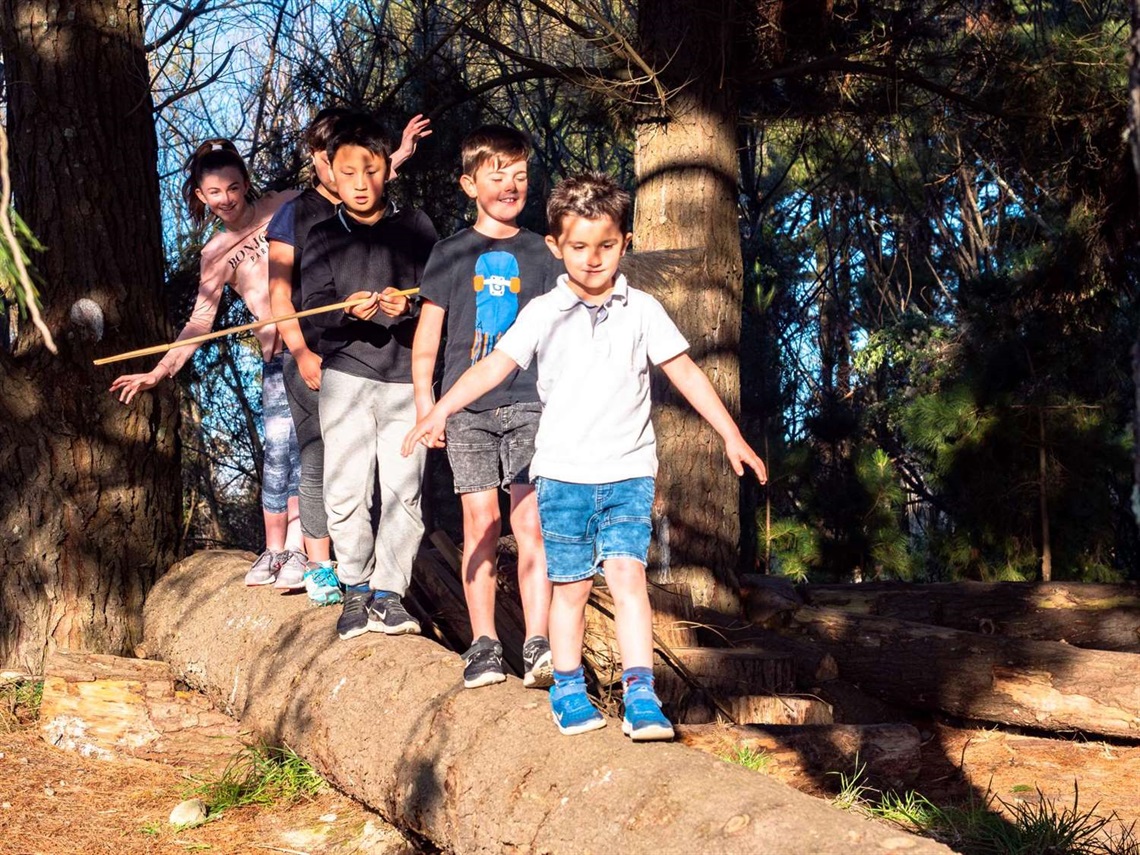
Discover why this riverside reserve is one of our favourite places in Palmy.
Just 5km from the city centre, Ahimate Reserve offers a sense of wilderness beside the Manawatū River. You can walk, run, cycle, explore the natural play area, exercise your dog – and even your horse!
The area was once home to Ahimate Pā, where the Paneiri people lived under Chief Te Kurupu. The pā was an important place for growing food, particularly kūmara. Pou at the reserve recognise the area’s cultural significance.
Starting in 2017, Council has worked with Rangitāne, community groups and park users to transform the reserve. Community planting and weed removal have helped establish native bush, wilding meadows and nut trees, providing habitat and food for wildlife.
Getting here
You can enter the reserve from Buick Crescent or the end of Maxwells Line, next to Paneiri Park.
Use the Maxwells Line entrance for car parking and easy access to the dog park. You can also walk into the reserve from Dittmer Drive for quick access to the Manawatū River Pathway.
Things to see and do
Ahimate Reserve includes:
- native bush, wilding meadows and nut trees
- pou recognising the area’s cultural significance
- a fenced dog park and agility equipment
- bike trails and jump courses
- a natural play area
- limestone shared paths
- car parking.
The paths through the reserve connect with longer routes beside the river and are popular with walkers, runners, cyclists, dog owners and horse riders.
Natural play area
Ahimate doesn’t have a traditional playground. Instead, its natural play area encourages tamariki to explore, be creative and enjoy nature.
It includes logs, branches, earth mounds and low-hanging trees, along with a tree hut and climbing nets.
Bike trails and jumps
Mountain biking groups have helped create trails, jumps and other features throughout the reserve. Please ride within your ability and look out for other people using the park.
Ahimate dog park
Dogs can exercise off-leash throughout Ahimate Reserve. There’s also a fenced dog park where they can burn off energy and try the agility equipment.
Keep your dog under control and be considerate of other people and animals using the reserve.
Find out more about Ahimate dog park
Staying overnight in a campervan
You can stay at Ahimate Reserve for up to three consecutive nights in a fully self-contained campervan.
You’ll need approval from our parks team if you want to stay longer. Phone 06 356 8199 or email info@pncc.govt.nz.
While staying at the reserve:
- keep dogs under strict control
- be considerate of other campers and reserve users
- bring your own drinking water – none is available on site
- take all rubbish with you
- don’t cut or damage living plants
- take your wastewater to an approved dump station.
Manawatū River Pathway
Ahimate Reserve provides access to the Manawatū River Pathway.
Take care near the river. The Manawatū River can become deep very quickly and has a strong current. Its banks may be unstable, and submerged logs or other debris can create hidden hazards.
Keep children closely supervised and follow the warning signs at the reserve.
We’re encouraging everyone to be safe around our awa (river).
Water Safety NZ says anyone visiting our waterways, streams and awa should follow these handy tips to keep you and your whānau safe.
Wait 72 hours after rainfall before entering the river
Rivers are changeable and unpredictable – particularly after heavy rainfall. Riverbanks can also become unstable during and after heavy rain.
Check weather forecasts including rainfall in the hills above that could fill the streams and rivers where you are.
Look before you leap – check for hazards
Upstream, downstream and where you’re swimming. Rivers contain hidden dangers and swimming holes can change depths from summer to summer.
Always enter feet first and establish an exit point before you enter.
Keep looking
- Can you see the bottom?
- Is it deep enough for jumping or diving?
- Does the riverbed drop away close to the edge?
- Could you handle the current if you got swept away?
Rivers can be dangerous for a number of reasons
- They can be very cold.
- They are affected by the weather and can rise and fall quickly.
- The current can be strong even if the river looks calm and the water is slow moving.
- A person doesn’t float as well in river water as they do in sea water; someone in a river current will use a lot of energy to keep themselves afloat.
- There are often hidden objects.
Signs of an unsafe river
- Water moving faster than normal walking pace.
- Discoloured, cloudy water.
- Visible debris such as tree branches, rocks and logs.
A safe rescue is a land-based rescue
Dial 111 immediately if you see anyone in danger, so emergency services can get there as soon as possible.
If someone is being swept downstream, the only safe rescue is a land-based rescue. Do not enter the river after them. It is unlikely you will be able to reach them to help them and you may need to be rescued yourself.
- Follow the person in trouble down the riverbank.
- Find a safe place where the person may be able to swim towards the bank.
- Use an object like a tree branch to reach out over the river.
- Encourage the person in trouble to grab the branch or paddle and hang on.
- Pull them to the riverbank and help them out.
If you cannot rescue the person safely from the bank:
- Encourage the person to turn on their back and float feet first down the river
- If practical, throw the person a buoyant object like a bucket, chilly bin or ball that they can hang onto and use to keep themselves afloat.
Guide your dog to a safe location
It’s good to know how to help your dog, but you should never risk your life for a drowning pet.
Do not go into dangerous water (such as fast running river water or any water where you don’t know the depth) to rescue your dog.
The best response is to remain calm and guide your dog by to a location where you can get them out of the water safely. This includes walking along the riverbank or waterway while calling your dog’s name. Stay ahead of your dog’s float path so they are not fighting against the current of the water, but paddling with it towards the edge of the waterway.
- Medium to big dogs that panic in the water can easily drown a human, especially those who are small or poor swimmers.
- Jumping into deep river water to swim alongside your dog puts you at serious risk. You can provide more help by attempting a land rescue. Dogs are very buoyant which can make them great swimmers.
Learn more on the Water Safety NZ website
Download the translated posters
These are translated posters of the water safety information.
They are available in different languages. Download and share them with your friends.
English(PDF, 480KB) Burmese(PDF, 541KB) Dari(PDF, 528KB) Dzongkha(PDF, 535KB) Karen(PDF, 531KB)
Location
Ahimate Reserve, Maxwells Line, Awapuni 4412 View Map
-40.38200298749571, 175.59502369802416
Ahimate Reserve, Maxwells Line ,
Awapuni 4412
Ahimate Reserve, Maxwells Line ,
Awapuni 4412
Ahimate Reserve
Photo Gallery